
Why AI Architecture — Not MQ Position or Feature Checklists — Is the Real Selection Variable in 2026
By Q2 2026, Blue Yonder, Kinaxis, and o9 Solutions share the same Gartner Magic Quadrant designation: Leader. For an enterprise supply chain leader trying to shortlist a demand planning AI platform, that shared label is nearly useless. It tells you that all three vendors have sufficient market presence, customer references, and functional breadth to clear a threshold — it does not tell you which platform's underlying AI architecture fits your organization's operational complexity, data maturity, or industry vertical.
Feature checklists have the same problem. Every enterprise demand planning platform in 2026 can check the boxes on demand sensing, probabilistic forecasting, scenario simulation, and agentic AI. The boxes are not the differentiator. The architecture behind those capabilities is.
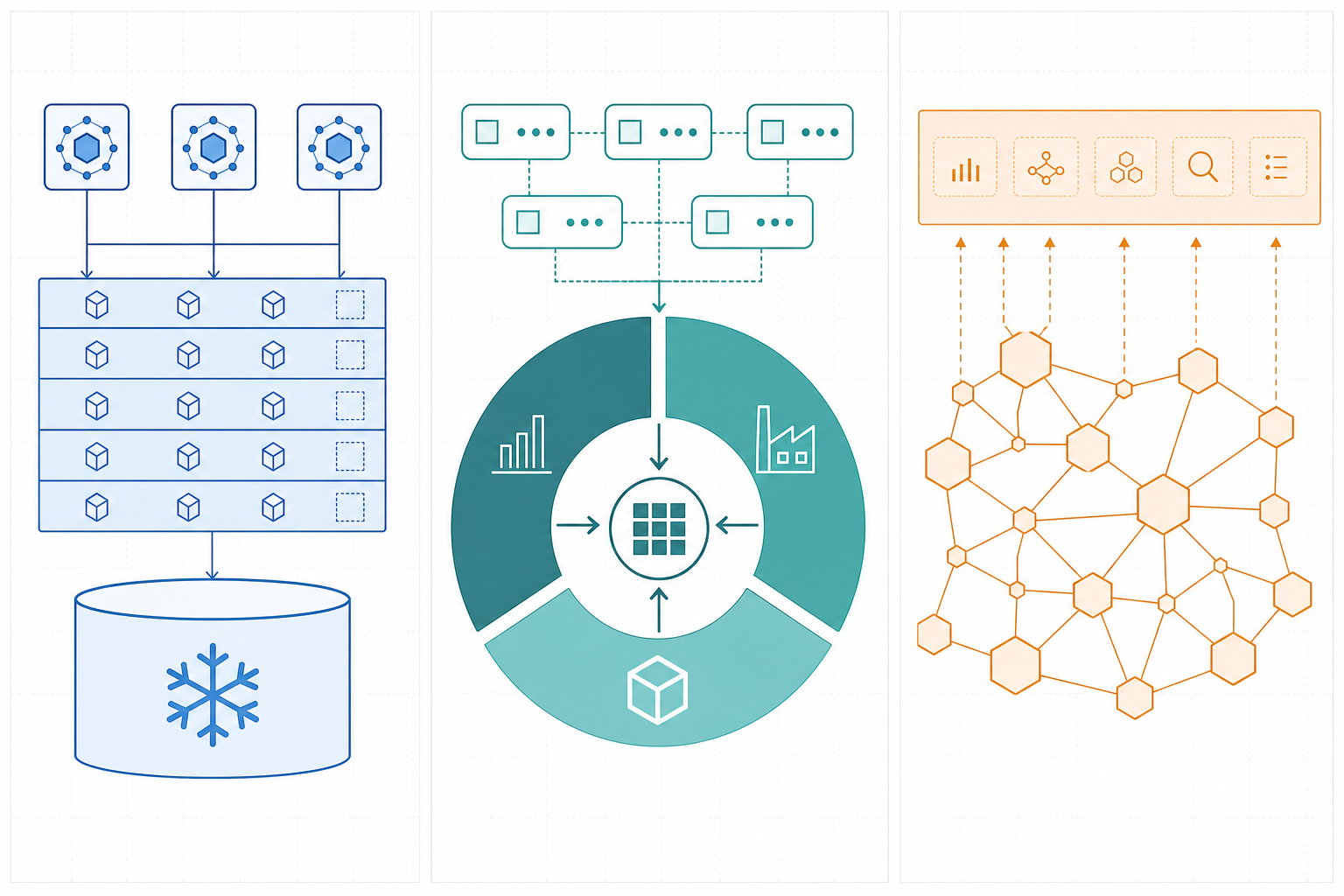
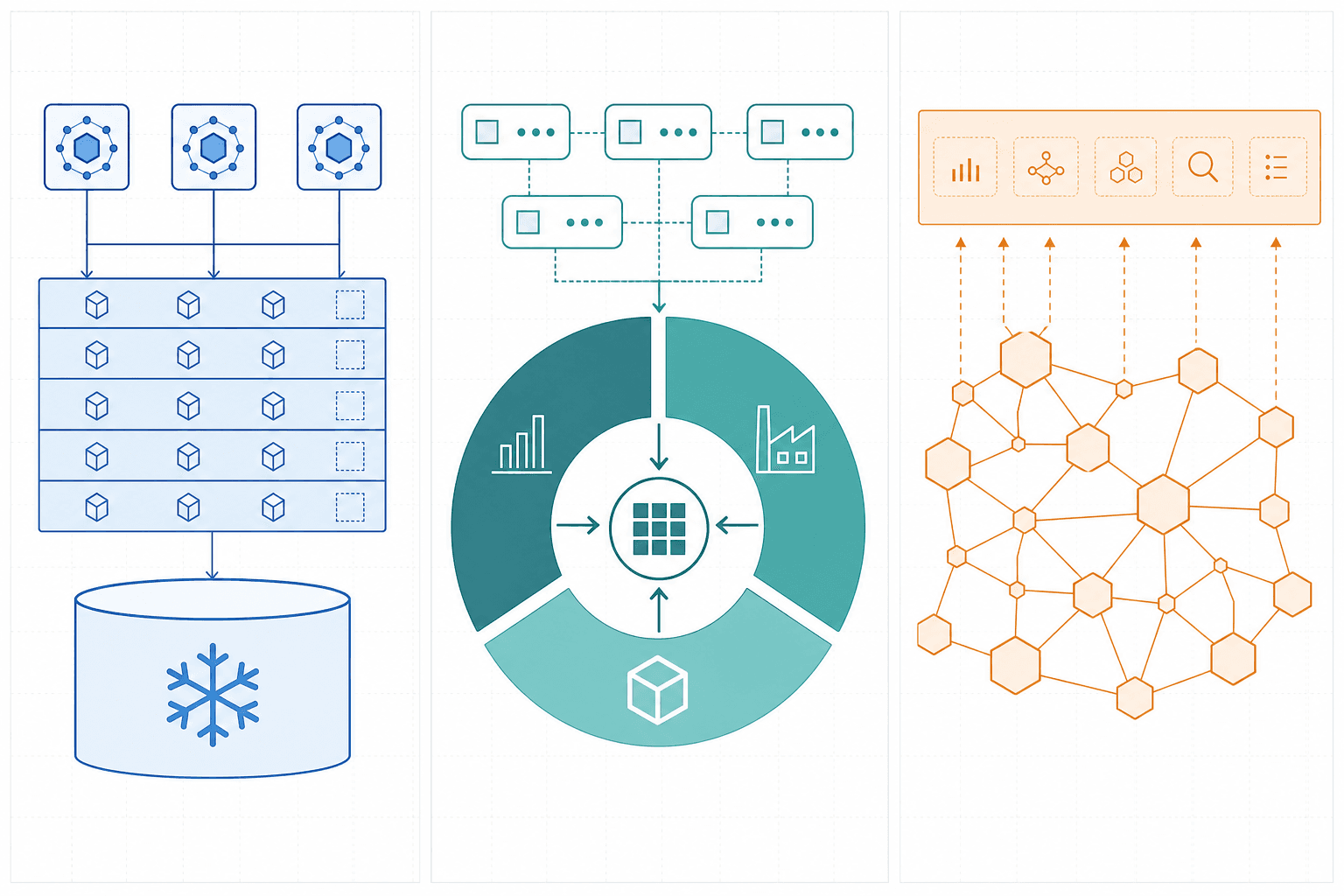
Blue Yonder's demand planning runs as microservices on the Snowflake Data Cloud, with autonomous domain agents executing against a shared data foundation. Kinaxis Maestro's foundational differentiator is a concurrent in-memory planning engine where demand, supply, and inventory views update simultaneously — not sequentially — when any signal changes. o9 Solutions builds its entire AI reasoning capability on top of an Enterprise Knowledge Graph that explicitly models supply chain entities and relationships as a living digital twin.
These are not stylistic differences in how three vendors package similar technology. They are structurally different bets about what the hard problem of enterprise demand planning actually is — and each architecture creates distinct advantages and constraints that only become visible when you map them against a specific organization's operational profile.
Market Context: The 2026 Gartner MQ for Supply Chain Planning and What It Doesn't Reveal
In March 2026, Gartner published its inaugural Magic Quadrant for Supply Chain Planning Solutions, split into two reports: Discrete Industries (published March 18, 2026) and Process Industries (published March 17, 2026). All three vendors in this comparison were named Leaders in the Discrete Industries report.
| Vendor | Discrete Industries MQ (Mar 2026) | Process Industries MQ (Mar 2026) | Notable MQ Positioning |
|---|---|---|---|
| Kinaxis Maestro | Leader | Leader | Highest on Ability to Execute; furthest on Completeness of Vision in Discrete (per Kinaxis announcement) |
| Blue Yonder | Leader | Visionary | Named Leader in Discrete; Visionary in Process Industries |
| o9 Solutions | Leader | Not confirmed in sources | Only 2025 Gartner Peer Insights Customers' Choice for SCP |
What the MQ evaluates — market presence, product viability, customer base, functional breadth — is not the same as architectural fit to a buyer's operational profile. The quadrant does not assess whether a platform's planning engine can handle your specific multi-ERP integration complexity, whether your data engineering team can build and maintain an Enterprise Knowledge Graph, or whether your Snowflake footprint aligns with Blue Yonder's data foundation requirements. Those questions require a different analytical frame.
Blue Yonder Cognitive Demand Planning: Microservices on Snowflake with Autonomous Domain Agents
Blue Yonder's demand planning architecture is built on two structural decisions: a microservices decomposition of planning capabilities, and the Snowflake Data Cloud as a unified data foundation. These two choices determine everything downstream about how the platform handles data integration, AI model deployment, and agentic execution.
The Snowflake partnership is not a data warehouse integration in the conventional sense. Blue Yonder logically maps customer data to a single semantic data model within Snowflake, meaning data can remain where it is while applications access it without requiring traditional ETL pipelines. This architecture is designed to eliminate the latency and cost of technical integrations that typically slow enterprise AI deployments.
On top of this data foundation, Blue Yonder's ML Studio enables data scientists to build, tune, and deploy machine learning models at the per-SKU level — addressing specific outcomes and scenarios rather than applying a single global model across all products. The platform uses a 'glass box' approach to demand drivers, making the causal factors behind each forecast inspectable rather than opaque. This explainability layer matters for regulated industries and for planners who need to understand why a forecast changed before acting on it.
The SADA Autonomous Domain Agents
Blue Yonder's agentic AI layer deploys five domain agents — Warehouse, Network, Transportation, Space, and Demand/Supply — each running the SADA (Sense, Analyze, Decide, Act) loop continuously. Blue Yonder classifies these as fully autonomous tier-3 agents, distinguishing them from task agents (which execute single actions) and RAG agents (which retrieve and synthesize information). The agents trigger governed actions against WMS, TMS, and OMS systems rather than producing recommendations for human review.
- All five agents share a single Snowflake data foundation, enabling direct interoperability without middleware between, for example, the Demand/Supply agent and the Warehouse agent.
- Blue Yonder's vendor-stated deployment timeline for these agents is 6–12 weeks without rip-and-replace of existing systems.
- The 2026 acquisitions of flexis AG (production scheduling for automotive and industrial manufacturing) and One Network Enterprises (multi-enterprise network orchestration across trading partners and logistics networks) extend the platform's planning-to-execution integration breadth significantly beyond demand planning into production scheduling and multi-party coordination.
For enterprises already operating on Snowflake, or those willing to standardize on it, Blue Yonder's architecture offers a coherent path from data foundation to autonomous execution. The flexis AG and One Network Enterprises acquisitions make it particularly relevant for manufacturers who need to connect demand planning with production scheduling and multi-enterprise logistics coordination on a single platform.
Kinaxis Maestro: Concurrent In-Memory Planning Engine with Composable Agentic AI
Kinaxis Maestro's architectural foundation is its concurrent in-memory planning engine — and understanding what 'concurrent' actually means here is essential to evaluating whether Kinaxis fits a given organization's planning problem.
In most demand planning platforms, planning runs sequentially: demand is calculated, then supply is calculated based on demand output, then inventory is calculated based on supply output. When a signal changes — a supplier delays a shipment, a promotion drives unexpected demand — the entire sequence must rerun. For organizations with complex multi-tier supply networks, this sequential rerunning creates latency that makes real-time scenario evaluation impractical.
Kinaxis's concurrent engine maintains demand, supply, and inventory views simultaneously in memory. When any signal changes, all three views update together in real time without rerunning sequential steps. This architectural choice is what enables the scenario evaluation speed that Kinaxis customers in automotive, electronics, aerospace, and pharma cite as the primary value driver — not the forecasting engine itself, but the ability to evaluate supply constraint trade-offs across the full planning horizon in real time.
The Eight-Layer Platform Architecture
Maestro's platform architecture is organized into eight interoperable layers:
- Multimodal Data — ingestion and normalization across internal and external data sources
- Semantic Intelligence — ontologies and semantic reasoning so every agent operates from the same live context
- Decisioning — heuristics, optimization, simulation, and ML combined in proprietary ways
- Democratized Experience — no-code, low-code, and pro-code tooling for different user profiles
- AI Runtime — predictive, generative, and agentic AI execution
- Security and Governance — controls and audit trails for autonomous actions
- Orchestration — coordinates how signals inform plans, plans drive decisions, and decisions are actioned
- Learning — uses outcomes to continuously improve models
Maestro Agent Studio: GA Capabilities and Roadmap Distinction
On February 5, 2026, Kinaxis launched Maestro Agent Studio, giving supply chain teams a no-code way to compose AI agents grounded in their real operating context — using the same data, workflows, and tools planners already rely on. Agents work with OpenAI GPT and Google Gemini while keeping their behavior anchored in Maestro's trusted data, intelligence, and governance layer.
Kinaxis has maintained a Leader position in the Gartner MQ for over a decade. Publicly referenced clients include P&G and Reckitt. In Reckitt's deployment of Maestro Enterprise Scheduling, the vendor-reported outcome was that schedulers shifted time from manually building schedules toward analyzing scenarios and making strategic decisions — a pattern consistent with the concurrent planning architecture's design intent.
o9 Digital Brain: Enterprise Knowledge Graph with Neuro-Symbolic APEX Model
o9's architectural bet is the most structurally distinct of the three platforms. Where Blue Yonder starts with a data foundation and Blue Yonder agents execute against it, and where Kinaxis starts with a planning engine and adds AI on top of concurrent data, o9 starts by explicitly modeling the supply chain as a knowledge graph — and builds all AI reasoning capabilities on top of that relational model.
The Enterprise Knowledge Graph (EKG) is a four-layer system that models supply chain entities — products, customers, channels, suppliers, locations — and the relationships between them explicitly. This is not a conventional relational database or a data warehouse. The EKG functions as a living digital twin of the business, continuously updated as conditions change, and it provides the contextual substrate that o9's AI uses to reason across cross-entity effects that simpler architectures handle at the category or aggregate level.
The operating loop o9 describes is: Sense → Model → Simulate → Decide → Execute → Learn. AI/ML driver-based forecasting processes large volumes of internal and external leading indicators of demand. Exception-based forecasting with centralized alerts enables what o9 calls proactive, touchless demand planning — where the system surfaces only the exceptions that require human judgment rather than routing all decisions through planners.
The APEX Model: Neuro-Symbolic AI for Autonomous Planning
On March 26, 2026, o9 launched the APEX model, positioning it as Agile, Adaptive, Autonomous Planning and Execution. APEX is described as using neuro-symbolic AI with post-game analysis and closed-loop learning — enabling enterprises to learn systematically from planning outcomes and improve faster across functions.
With o9's breakthrough Neuro-Symbolic AI technology to power the APEX Model, enterprises can now learn systematically from post-game analysis, improve faster across functions, deploy new capabilities at the pace of the market and continuously evolve their operations. — Chakri Gottemukkala, CEO, o9 Solutions (March 2026)
o9's publicly referenced client outcomes in food and beverage include 70–90% touchless planning adoption and a 60% reduction in stock-outs. These figures are vendor-curated and not independently audited. Named clients include Kroger, Keurig Dr Pepper, and Coca-Cola. o9 is the only vendor among the three to hold the 2025 Gartner Peer Insights Customers' Choice designation for Supply Chain Planning Solutions — a signal of customer satisfaction at scale, though not a measure of architectural capability.
Head-to-Head Architecture Comparison: Key Dimensions for Enterprise Evaluators
The table below places the three platforms side by side on the dimensions that matter most for enterprise architectural fit. Read it as a diagnostic tool, not a scoring rubric — each row reveals a different axis of differentiation, and no single axis determines the right choice.
| Dimension | Blue Yonder | Kinaxis Maestro | o9 Solutions |
|---|---|---|---|
| Core AI model type | Probabilistic ML with per-SKU model customization via ML Studio; glass-box explainability | Concurrent in-memory planning with heuristics, optimization, simulation, and ML combined; semantic intelligence layer | Knowledge graph-grounded AI/ML with neuro-symbolic reasoning (APEX model, March 2026) |
| Data foundation | Snowflake Data Cloud as unified semantic data model; data stays in place, apps access via governed layer | Supply chain-specific data fabric; multimodal data ingestion across internal and external sources | Enterprise Knowledge Graph (EKG) as living digital twin; four-layer relational model of supply chain entities |
| Planning engine type | Microservices-based; modular decomposition of planning capabilities | Concurrent in-memory engine; demand, supply, and inventory views update simultaneously | EKG-grounded integrated planning; all functional plans connected across horizons on single platform |
| Agentic AI — GA status Q2 2026 | Five SADA autonomous domain agents (Warehouse, Network, Transportation, Space, Demand/Supply) — production-grade, vendor-classified as tier-3 fully autonomous | Maestro Agent Studio (launched Feb 5, 2026) — no-code composable agents with GPT/Gemini integration and human-in-the-loop governance; orchestrator agents and external agent connections are roadmap items, not yet GA | APEX model (launched March 26, 2026) — neuro-symbolic AI for autonomous planning and execution with closed-loop learning; detailed implementation specifics not publicly documented |
| Deployment timeline (full enterprise) | Agents: 6–12 weeks per domain (vendor claim; likely single-domain greenfield scope); full five-agent enterprise deployment timeline not separately stated | 12–18 months full deployment; 6–9 months single-area with RapidStart accelerators (source: Horizon Solutions competitor page — directional estimate) | 12–24 months full deployment; 9–12 months single-area; EKG data engineering adds significant front-loaded effort (source: Horizon Solutions competitor page — directional estimate) |
| Enterprise TCO range | Not publicly disclosed at enterprise scale | $4–12M enterprise (source: Horizon Solutions competitor page — directional estimate from competitor with commercial interest; treat as directional only) | $5–15M+ enterprise (source: Horizon Solutions competitor page — same caveat applies; EKG setup and data engineering contribute to upper end) |
| Industry sweet spots | Retail, CPG, automotive/industrial (via flexis AG), multi-enterprise logistics (via One Network Enterprises) | Automotive, electronics, aerospace, pharma — multi-ERP, multi-region manufacturers where concurrent re-planning speed is the primary value driver | CPG, food and beverage, retail with deep product-customer-channel relational complexity and mature data engineering teams |
| Key integration dependency | Snowflake Data Cloud (native data foundation); SAP, Oracle, and other ERP integrations via Snowflake semantic layer | Multi-ERP data integration required upfront for concurrent engine to function correctly; supply chain-specific data fabric handles normalization | EKG construction requires structured data from ERP, CRM, external market signals; data engineering team required for initial build and ongoing maintenance |
The most consequential rows for enterprise evaluators are data foundation, planning engine type, and deployment timeline. These three dimensions reveal the implementation prerequisites each architecture imposes before it can deliver value — and they are the dimensions most likely to be underweighted in vendor-led evaluations that lead with demo scenarios.
Enterprise Fit Scenarios: Matching Architecture to Operational Profile
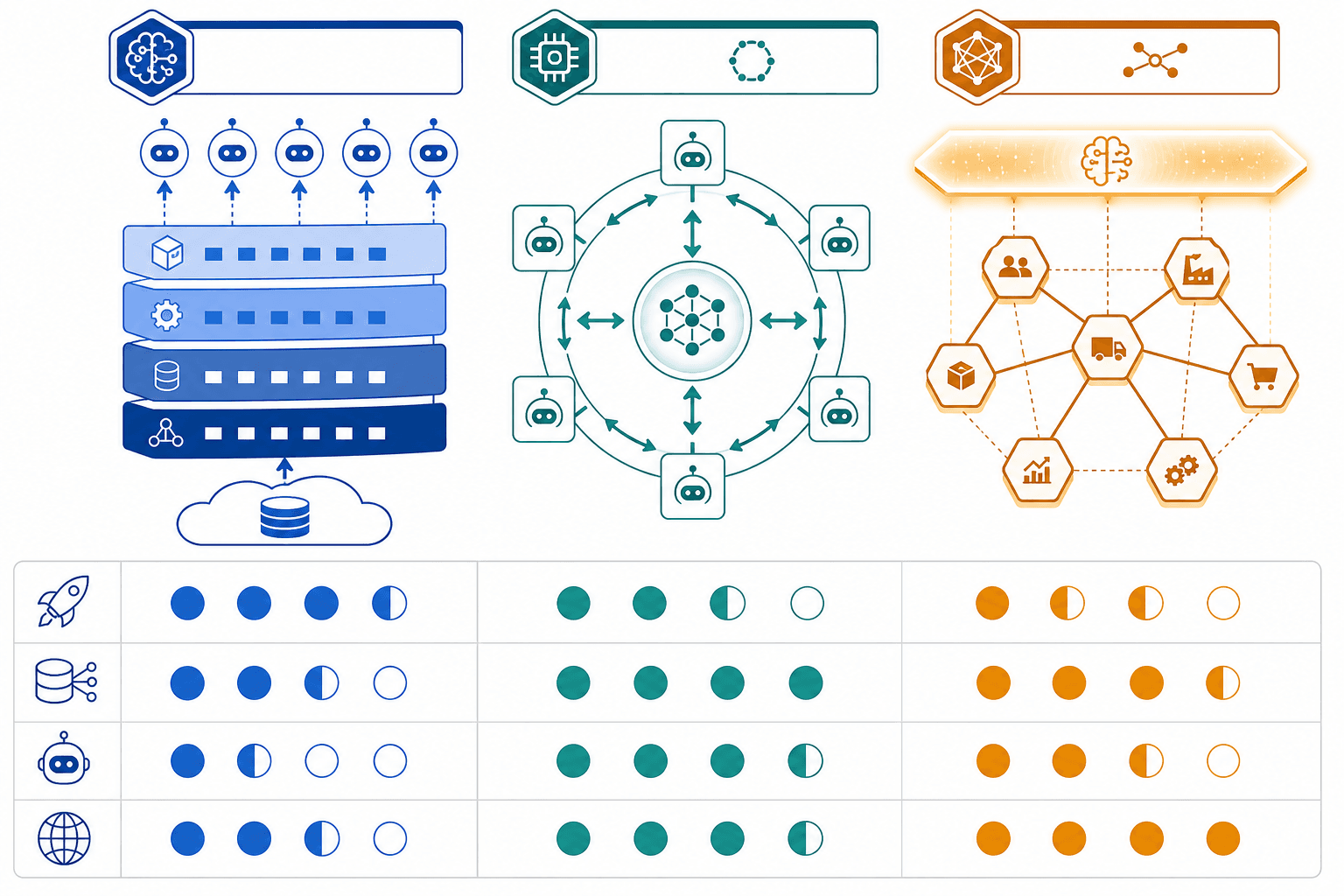
The architectural differences between these three platforms translate into concrete fit scenarios. The following three profiles are not exhaustive, and real enterprise situations rarely fit cleanly into a single scenario — but they represent the clearest cases where one architecture creates materially more value than the alternatives.
Scenario 1: Multi-ERP, Multi-Region Manufacturers — Kinaxis Maestro
If your primary planning problem is speed of response to supply constraint changes across a complex multi-tier network — multiple ERP instances, multiple manufacturing regions, long lead times, and frequent disruption events — Kinaxis Maestro's concurrent in-memory engine is architecturally suited to that problem in a way the other two platforms are not.
- Best-fit industries: automotive, electronics, aerospace, pharmaceutical manufacturing — environments where a single supply signal change cascades across hundreds of planning nodes simultaneously.
- The concurrent engine's value compounds with planning complexity. For organizations with relatively simple supply networks, the architecture's advantages over sequential planning are less pronounced.
- Maestro Agent Studio's composable agents are grounded in the concurrent data environment, meaning agentic actions operate on the same live planning context that human planners see — reducing the risk of agent actions based on stale or inconsistent data.
- RapidStart accelerators can compress single-area deployments to 6–9 months, but the full platform value requires clean multi-ERP data integration, which is typically the dominant implementation effort.
Scenario 2: Data-Mature Enterprises with Deep Relational Complexity — o9 Solutions
If your planning problem is fundamentally about reasoning across complex product-customer-channel relationships — where a promotion for one SKU affects demand for twenty others, where customer segmentation drives materially different forecast models, and where your organization has the data engineering maturity to build and maintain a knowledge graph — o9's EKG architecture delivers capabilities the other two platforms do not replicate.
- Best-fit industries: CPG, food and beverage, retail with sophisticated trade promotion management, multi-channel complexity, and deep analytics teams.
- The EKG's value is proportional to the quality and completeness of the relational data you can feed it. Organizations with fragmented data governance, poor master data quality, or limited data engineering capacity will struggle to realize the architecture's potential.
- The APEX model's closed-loop learning capability — systematically improving from post-game analysis — is architecturally coherent with the EKG's design, but requires sustained investment in model governance to prevent drift over time.
- o9's touchless planning capability (70–90% adoption cited in food and beverage deployments, per vendor-curated figures) is enabled by the EKG's ability to contextualize exceptions — the system can distinguish genuine anomalies from noise because it understands the relational context of each SKU.
Scenario 3: Retail and CPG Needing Planning-to-Execution Continuity — Blue Yonder
If your planning problem extends beyond demand forecasting into execution — where the value of better demand signals is only realized if they flow through to warehouse operations, transportation decisions, and supplier coordination without manual handoffs — Blue Yonder's integrated platform and autonomous agent architecture addresses that end-to-end continuity requirement.
- Best-fit industries: retail and CPG environments where WMS and TMS integration with demand planning creates measurable operational value; automotive and industrial manufacturers who benefit from the flexis AG production scheduling acquisition; enterprises with multi-enterprise network coordination requirements addressed by the One Network Enterprises acquisition.
- The Snowflake data foundation requirement is both an asset and a constraint. Organizations already standardized on Snowflake can realize the architecture's interoperability benefits quickly. Organizations on other data platforms face an additional migration or integration decision.
- The glass-box explainability approach to demand drivers is a genuine differentiator for organizations in regulated industries or with planner adoption challenges — forecast changes are inspectable, not black-box outputs.
- Lenovo's publicly reported deployment outcomes — a 5% boost in forecast accuracy, 4% improvement in on-time delivery, and 10% higher delivery accuracy across 30 manufacturing facilities and 180 markets — provide a reference point for enterprise-scale Blue Yonder deployment, though these are vendor-reported figures from a Supply Chain Digital article and should be treated accordingly.
Implementation Risks and Data Readiness Requirements
The most common failure mode in enterprise demand planning AI deployments is not selecting the wrong vendor — it is underestimating the data readiness and organizational prerequisites each architecture imposes before it can deliver value. Each of these three platforms has a distinct implementation risk profile.
Blue Yonder: Snowflake Foundation and Agent Scope Realism
- The 6–12 week agent deployment claim is scoped to single-domain or greenfield deployments, not full five-agent enterprise rollouts. Enterprises should plan for significantly longer timelines when deploying multiple agents across complex existing environments.
- Full enterprise deployment requires Snowflake data foundation readiness: standardized schema, data governance alignment, and resolution of data quality issues before the semantic data model can function as intended.
- The flexis AG and One Network Enterprises acquisitions are recent (2026). Integration maturity between these acquired capabilities and the core Blue Yonder platform should be assessed during vendor evaluation, not assumed.
- Agentic AI governance: the SADA agents trigger governed actions against WMS, TMS, and OMS systems. Human-in-the-loop policy design, audit trail requirements, and exception escalation workflows must be defined before agents go live — not after.
Kinaxis: Multi-ERP Integration and Concurrent Engine Prerequisites
- The concurrent engine requires clean, integrated multi-ERP data to function correctly. When demand, supply, and inventory views update simultaneously, inconsistent or delayed data from one ERP instance propagates immediately across all planning views. Data quality and integration completeness are not optional prerequisites — they are architectural requirements.
- RapidStart accelerators compress single-area deployment to 6–9 months, but single-area deployments must be planned from the outset for eventual full-platform integration. Isolated deployments that are not designed for later integration create technical debt.
- Maestro Agent Studio's composable agents are grounded in the concurrent planning environment, which is an architectural advantage — but it also means agent behavior is only as reliable as the underlying planning data quality. Agent governance frameworks should be established before Agent Studio deployment.
- Roadmap items (orchestrator agents, external agent connections) are not yet GA. Procurement decisions should be based on current capabilities, with roadmap commitments documented in contract terms.
o9: EKG Construction as the Dominant Implementation Risk
- EKG construction is the dominant implementation risk for o9 deployments. Building the knowledge graph requires a dedicated data engineering team, structured data from ERP and CRM systems, and mature data governance — before the AI reasoning capabilities can operate as designed.
- The front-loaded data engineering effort — estimated at 9–12 months for single-area and 12–24 months for full deployment (directional figures from Horizon Solutions competitor page; treat as estimates) — is not reducible by project management alone. It reflects the genuine complexity of modeling supply chain entities and relationships explicitly in the EKG.
- Organizations without mature data engineering capacity should treat EKG construction as a parallel organizational capability-building initiative, not just an implementation task. The EKG requires ongoing maintenance as the supply chain structure evolves.
- The APEX model's closed-loop learning requires model drift monitoring and governance frameworks to prevent the system from optimizing toward historical patterns that no longer reflect current conditions — a particular risk in volatile demand environments.
Evaluation Checklist for Supply Chain Leaders
The following questions are designed as a pre-shortlisting diagnostic — use them before vendor demos to determine which architectural approach is most likely to fit your organization's actual operating conditions. They are not a scoring rubric and do not produce a weighted recommendation.
Data Foundation Readiness
- Is your organization already standardized on Snowflake, or is a Snowflake migration part of your data strategy? If yes, Blue Yonder's native Snowflake architecture eliminates a significant integration prerequisite. If no, assess the cost and timeline of that dependency.
- How many ERP instances are in scope for demand planning integration, and how consistent is master data quality across them? Kinaxis's concurrent engine amplifies data quality issues across all planning views simultaneously — this is a prerequisite assessment, not a post-deployment cleanup task.
- Does your organization have a dedicated data engineering team with experience in knowledge graph or ontology-based data modeling? o9's EKG construction requires this capability. If it does not exist internally, assess whether it can be built or sourced before the implementation begins.
- What is the current state of your demand signal data? External leading indicators, POS data, promotion calendars, and market signals — how complete, timely, and consistently structured are they? All three platforms benefit from richer signal data, but o9's EKG is particularly dependent on structured relational data quality.
Planning Engine Requirements
- How frequently does your planning team need to evaluate supply constraint scenarios? If the answer is 'continuously, as disruptions occur,' Kinaxis's concurrent engine is architecturally matched to that requirement. If scenario evaluation is a weekly or monthly planning cycle activity, the concurrent engine's advantages are less pronounced.
- Is your primary planning bottleneck on the demand signal side (forecast accuracy, external signal integration) or on the supply constraint side (multi-tier network visibility, real-time constraint propagation)? Demand-side bottlenecks favor o9's EKG-grounded AI; supply-constraint bottlenecks favor Kinaxis's concurrent engine.
- Does your planning environment require integrated planning-to-execution continuity — where demand signals need to flow through to WMS, TMS, and supplier coordination without manual handoffs? If yes, Blue Yonder's autonomous domain agents and its WMS/TMS integration breadth are architecturally relevant.
Agentic AI Governance Readiness
- Has your organization defined a human-in-the-loop policy for autonomous planning actions? Specifically: which categories of decisions can an agent execute without human review, which require human approval, and which are outside autonomous scope entirely?
- What audit trail requirements apply to autonomous inventory, procurement, or logistics decisions in your organization? Regulatory, financial, or contractual obligations may constrain the level of autonomy that is operationally permissible.
- Does your organization have a model drift monitoring capability? Autonomous planning agents trained on historical patterns will drift as market conditions change. Who owns monitoring, and what is the escalation process when drift is detected?
Organizational and Timeline Constraints
| Question | Implication if Yes | Implication if No |
|---|---|---|
| Do you have a hard go-live deadline within 12 months? | Blue Yonder single-domain agent deployment (6–12 weeks per domain, vendor claim) may be the only realistic option; validate scope carefully | All three platforms are viable; prioritize architectural fit over deployment speed |
| Is your supply chain planning team heavily planner-centric with limited data science capability? | Kinaxis's no-code Agent Studio and democratized experience layer reduce data science dependency; Blue Yonder's ML Studio requires data scientist involvement | o9 and Blue Yonder ML Studio are viable; assess internal capability honestly |
| Are you planning a WMS or TMS platform evaluation concurrently? | Blue Yonder's integrated WMS/TMS and autonomous agent architecture creates consolidation opportunity; evaluate total platform footprint | Platform selection can be evaluated independently on demand planning merit |
| Does your industry require forecast explainability for regulatory or audit purposes? | Blue Yonder's glass-box approach to demand drivers is a specific architectural advantage; Kinaxis's semantic intelligence layer also supports explainability | Explainability is still valuable for planner adoption but is not a hard architectural constraint |
Comments
Join the discussion with an anonymous comment.