AI Use Case Library

Specific AI Applications, Bounded and Sourced

A structured, filterable library of specific AI applications across supply chain functions — demand forecasting, inventory optimization, procurement automation, warehouse operations, logistics routing, and supply chain visibility. Each entry covers what the use case does, where it delivers measurable value, real-world deployment examples, relevant vendors, and known implementation constraints. This group serves readers in the stakeholder-validation and vendor-shortlisting stages who need concrete evidence that AI works in a specific functional context. Excludes generic overviews of 'AI in supply chain' that do not anchor to a specific, bounded application. Boundary with case-studies: use case entries describe the application pattern and its general evidence base; case study entries document a specific company's deployment outcome.

Each entry covers what the use case does, where it delivers measurable value, real-world deployment examples, relevant vendors, and known implementation constraints.

36 use cases

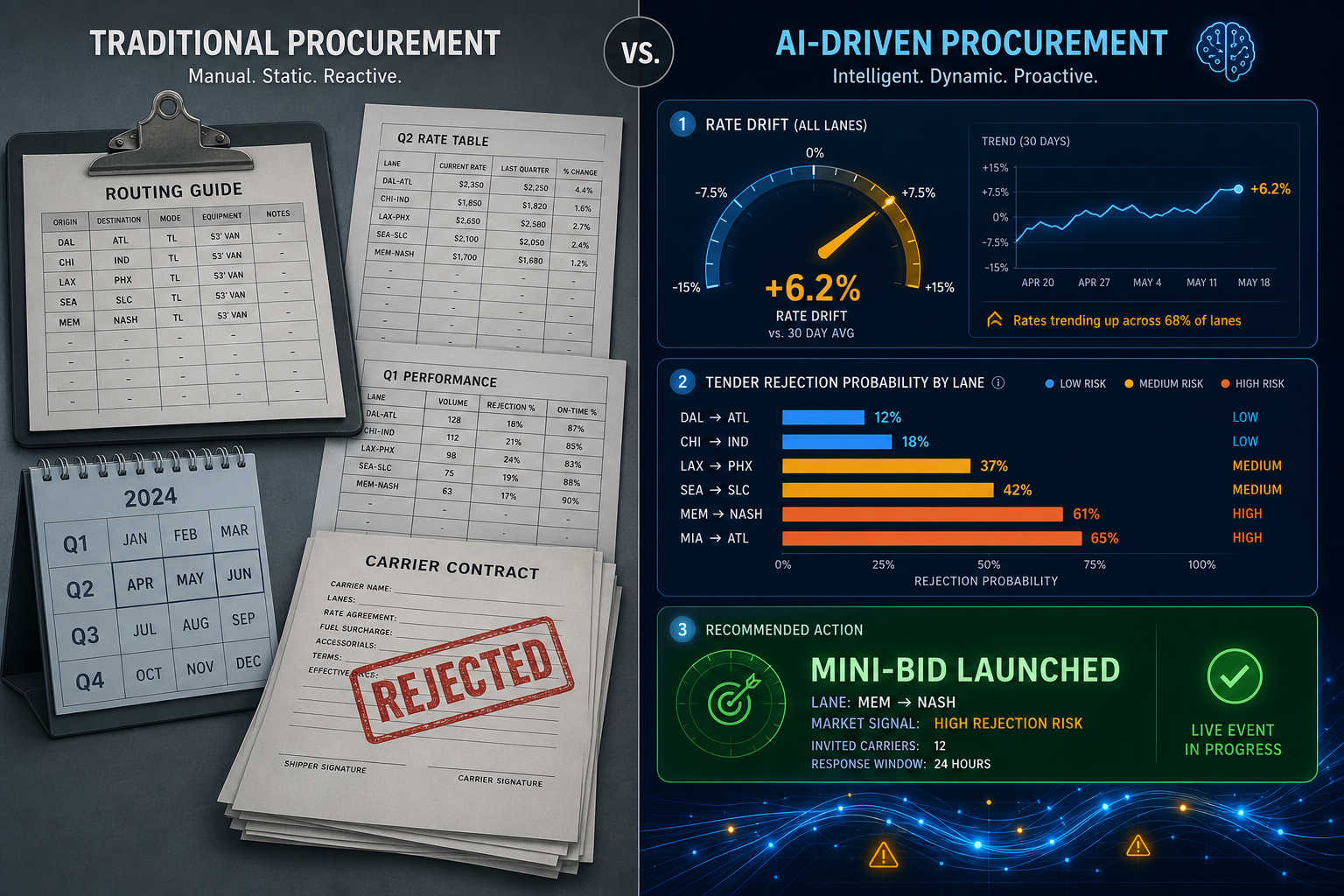
  • AI Contract Intelligence and NLP in Procurement Automation

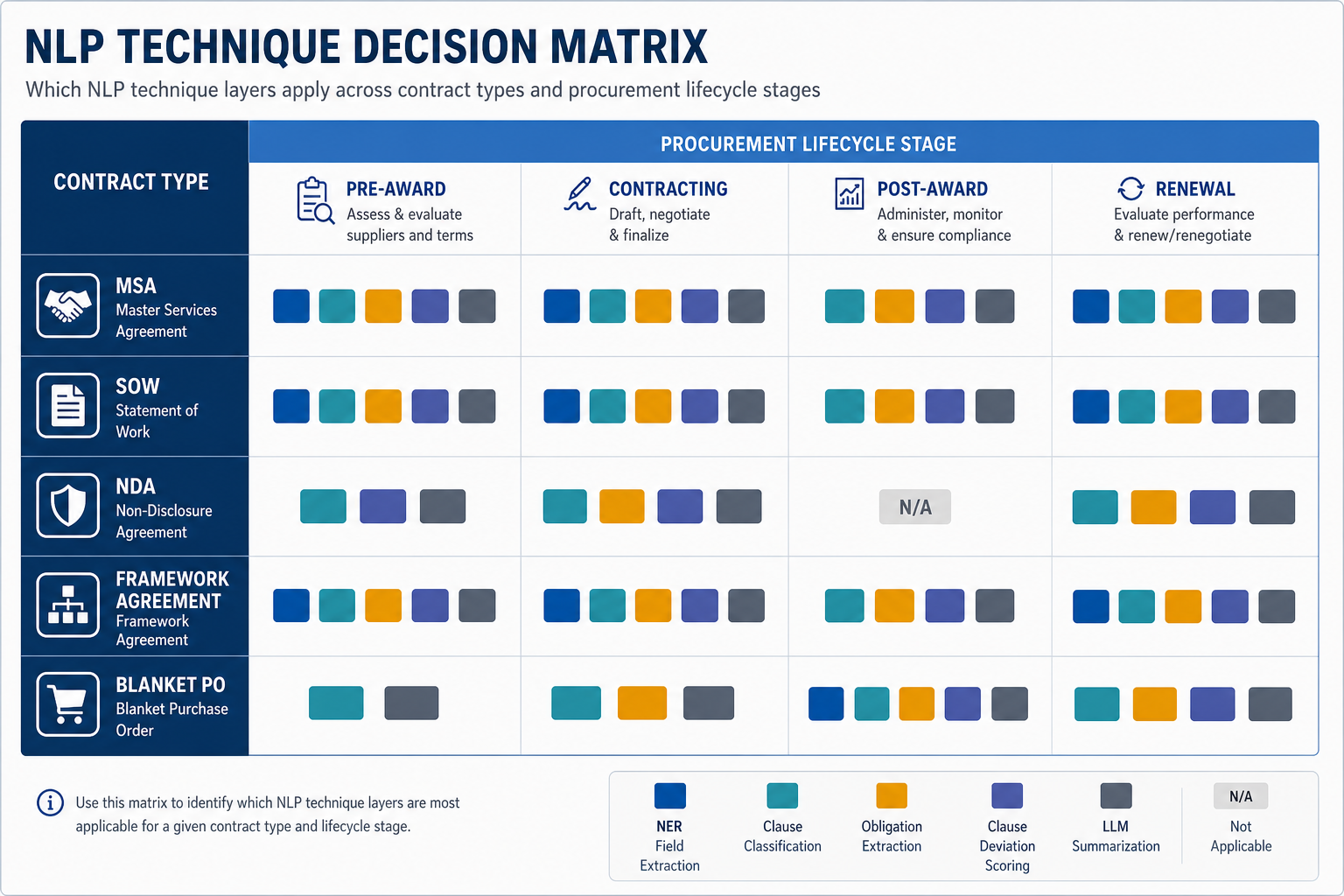
    A practitioner-level reference covering how NLP-based contract intelligence works in procurement automation — including data prerequisites, applicable use cases, known limitations, and what separates genuine AI capability from rule-based extraction dressed up as machine learning.

  • AI Freight Rate Prediction and Tender Rejection Modeling in TMS: Vendor Landscape Snapshot, Q2 2026

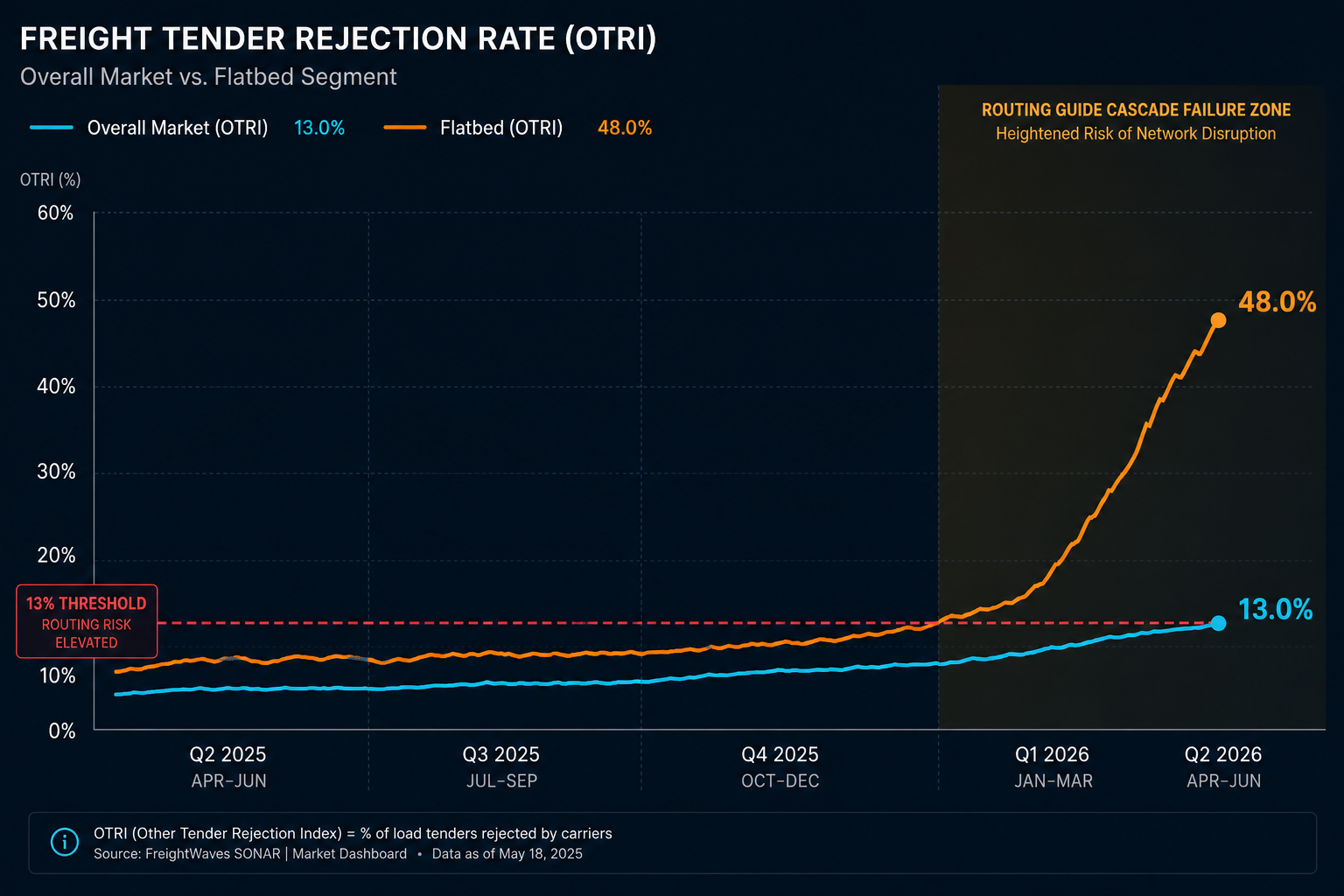
    AI Freight Rate Prediction and Tender Rejection Modeling in TMS: Vendor Landscape Snapshot, Q2 2026

    A structured comparison of verifiable AI capabilities across major TMS platforms — project44, Oracle OTM, Trimble, McLeod, and AI-native entrants — mapping each vendor's external market signal integration, lane-level prediction depth, and rejection modeling approach against the operational realities of a 2026 freight market where tender rejection rates have reached historically disruptive levels.

  • AI Spend Analysis Automation: Getting Real Tail Spend Visibility in Procurement

    AI-powered spend analysis automation is closing the visibility gap in tail spend — the fragmented, low-value transactions that collectively account for 20–40% of procurement budgets but receive minimal oversight. This article covers how the technology works, where it breaks down, and what data conditions are required before it delivers meaningful results.

  • Data Requirements and Deployment Conditions for AI Supplier Risk Scoring

    Data Requirements and Deployment Conditions for AI Supplier Risk Scoring

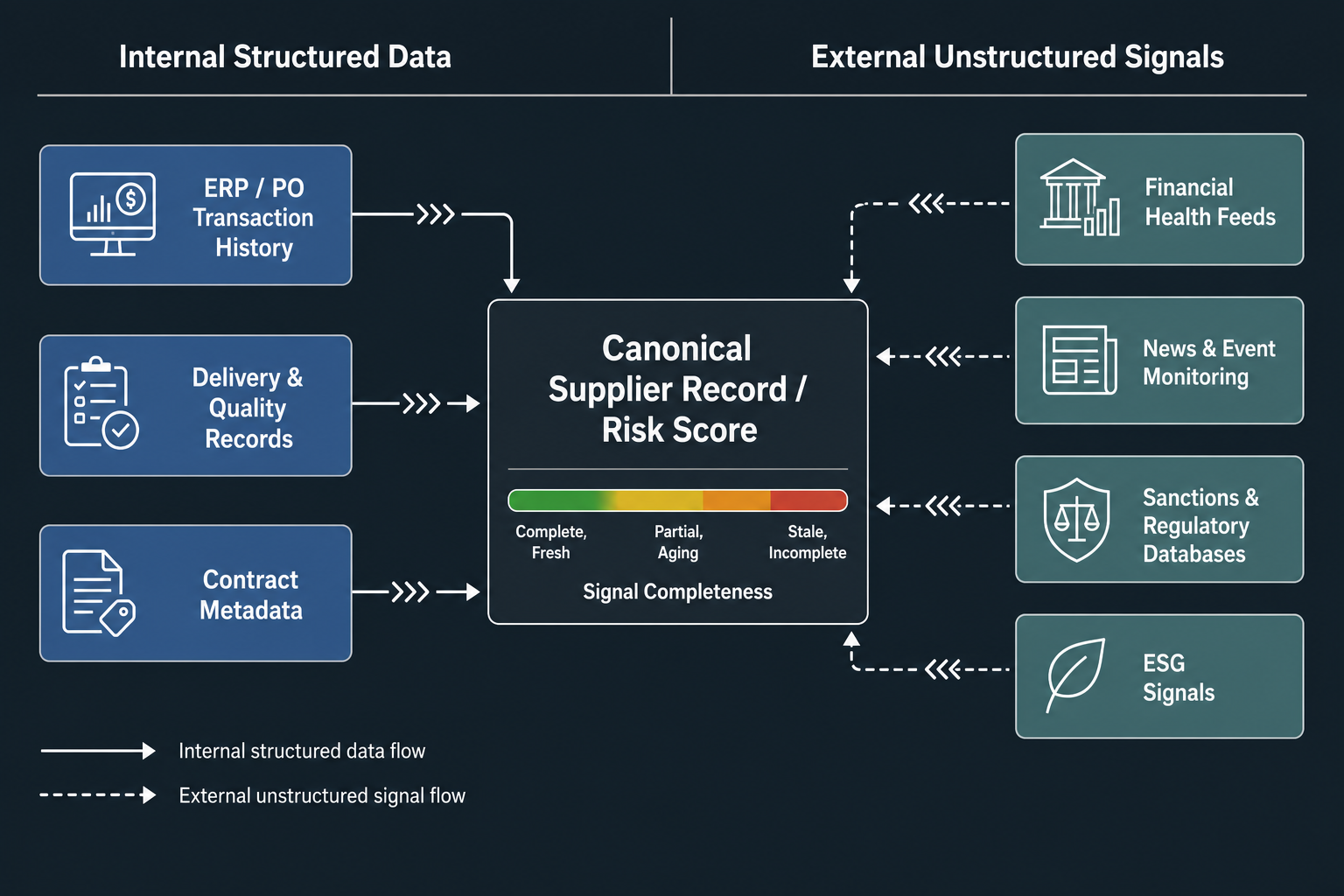
    Most AI supplier risk scoring deployments stall not because of model limitations but because of data readiness deficits — fragmented supplier records, shallow transaction history, and unresolved supplier identity across systems. This guide maps the internal structured data, external signal inputs, and integration conditions a scoring deployment actually requires, and provides a self-assessment framework for procurement teams before they commit to a vendor or build path.

  • AI Supplier Risk Scoring: An Implementation Guide for Mid-Market Procurement Teams

    AI Supplier Risk Scoring: An Implementation Guide for Mid-Market Procurement Teams

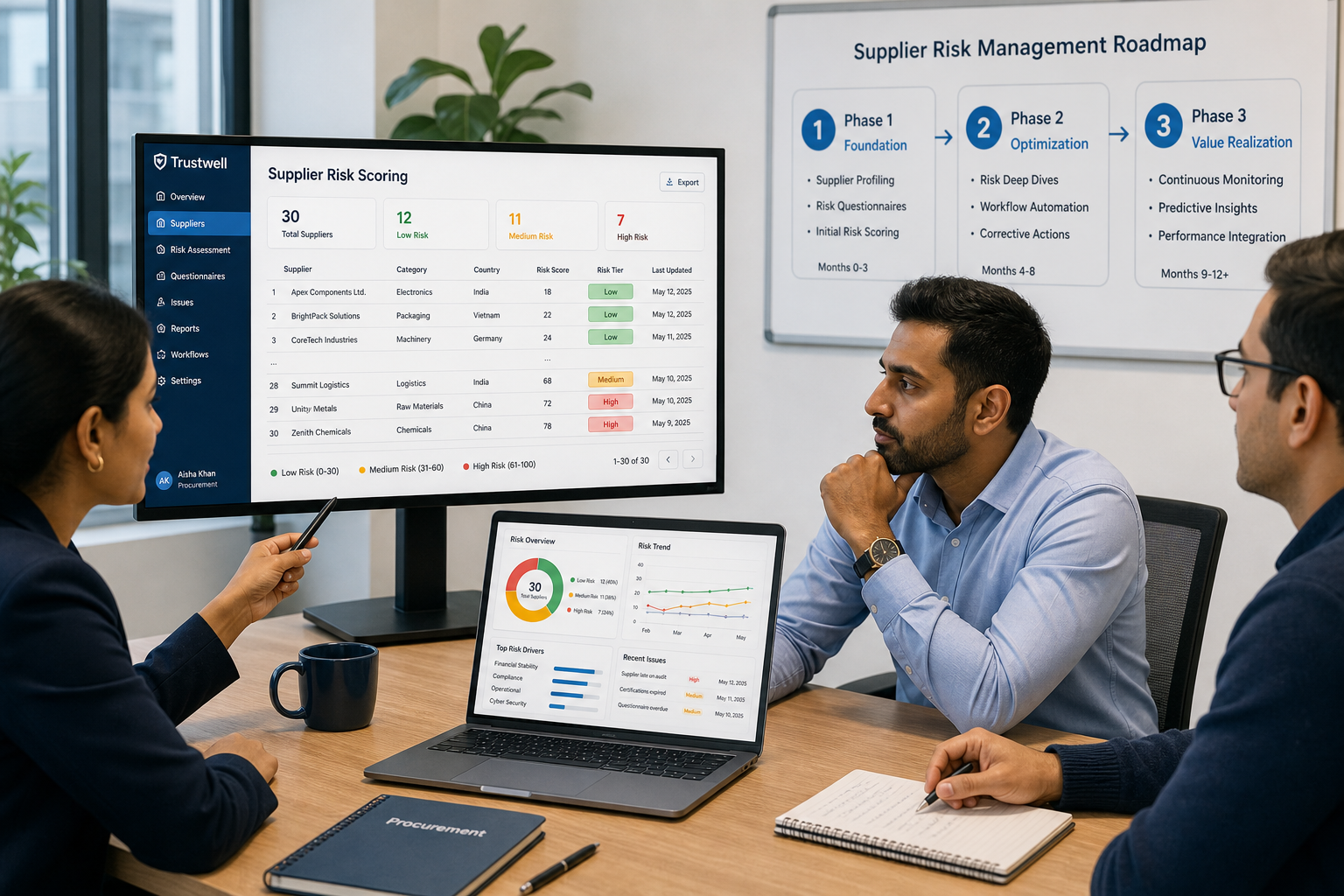
    Most AI supplier risk scoring guides assume enterprise-scale data infrastructure and dedicated data science teams that mid-market procurement organizations don't have. This guide provides a practical, phased implementation roadmap for procurement directors and sourcing managers at companies with 200M–2B USD in revenue — covering tool selection criteria, constrained-data pilot design, and workflow integration steps that embed scores into actual sourcing decisions.

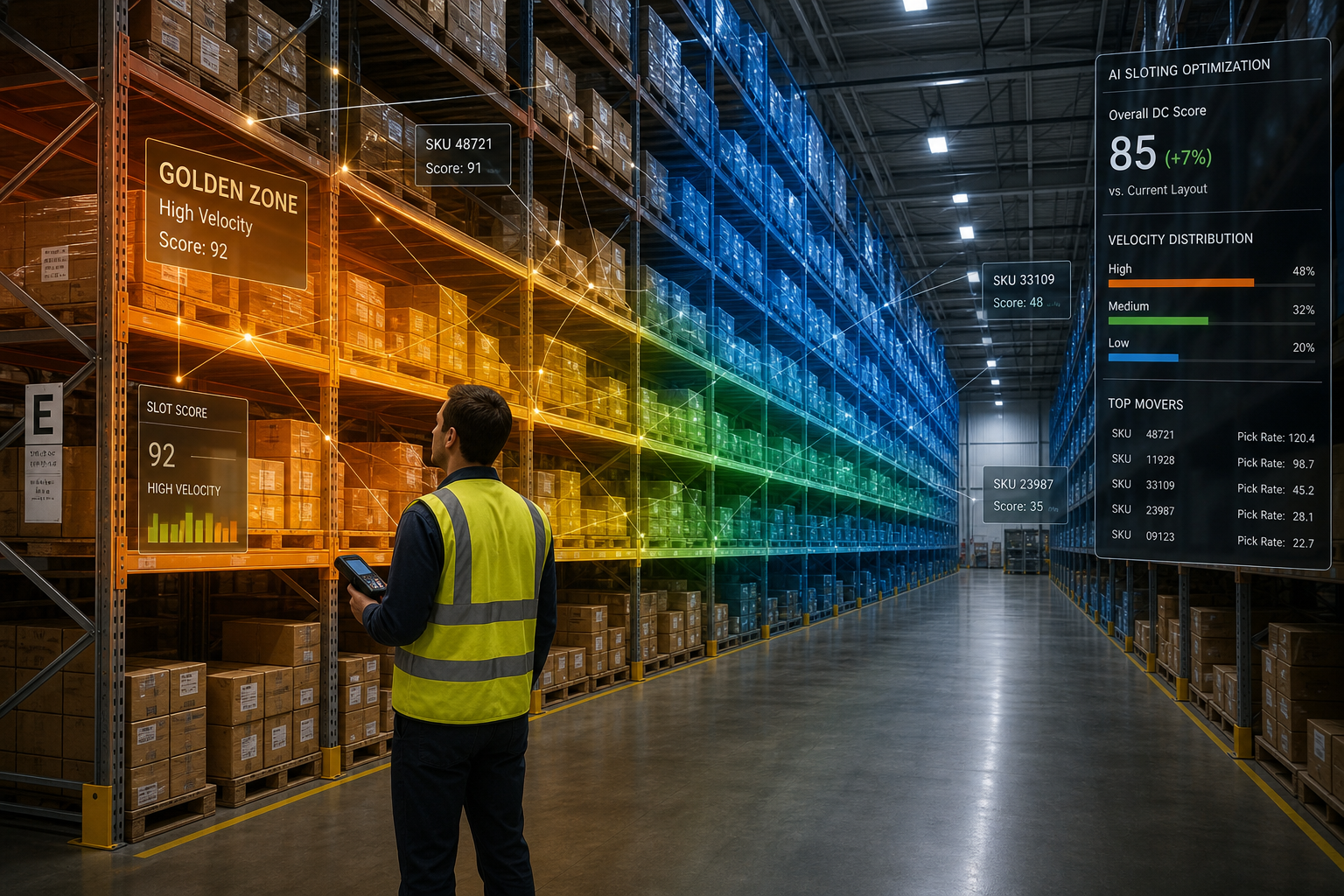
  • AMR and AI-Driven Slotting Optimization: How They Work Together in High-Velocity Warehouses

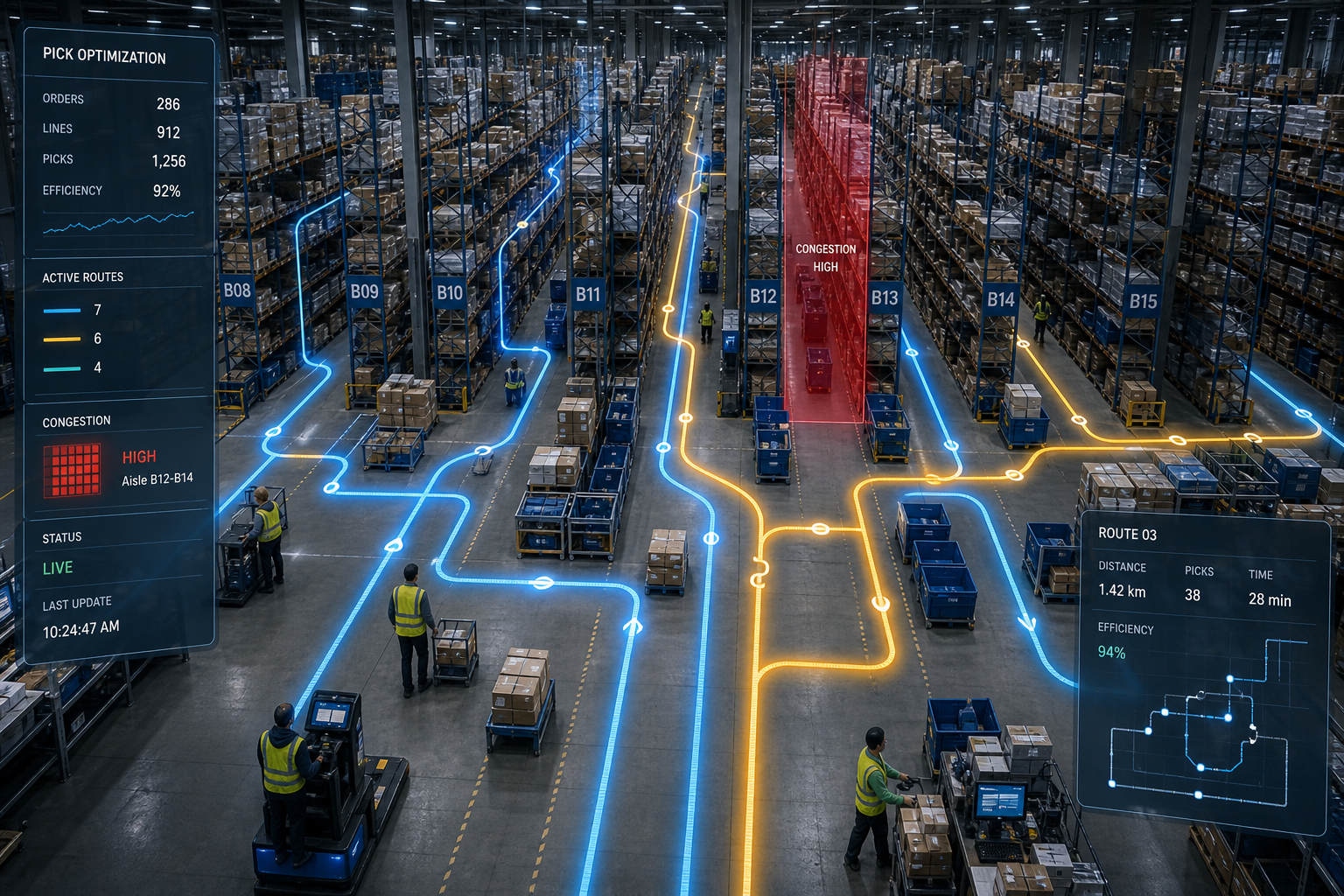
    Autonomous mobile robots and AI slotting engines are increasingly deployed together in distribution centers — but the integration logic, data prerequisites, and failure modes are rarely explained in one place. This use-case record covers how AMR fleets and slotting optimization models interact, what data conditions are required, and where deployments have run into trouble.

  • Digital Twin Supply Chain Control Tower: Deployment Case Analysis

    A structured deployment case record examining how digital twin technology has been integrated into supply chain control tower environments — covering the operational problems addressed, AI methods applied, integration prerequisites, measurable outcomes, and implementation challenges encountered in production rollouts.

  • Red Sea Shipping Disruptions 2024: Impact on Lead Time AI Models and Safety Stock Assumptions

    The Houthi attack campaign that began in late 2023 and escalated through 2024 forced Asia-Europe transit times up by 10–14 days and invalidated the historical lead time distributions embedded in most AI demand planning and inventory optimization models. This entry documents the planning variable impact, the specific model failure modes observed, and the corrective actions required for safety stock recalibration.

  • US Tariff Escalation 2025: Impact on AI Supply Chain Planning Assumptions

    The 2025 US tariff escalation cycle invalidated hardcoded cost, lead time, and sourcing-mix assumptions embedded in AI demand and inventory planning models. This entry documents the specific planning variables affected, the functions most exposed, and the model recalibration requirements that followed.

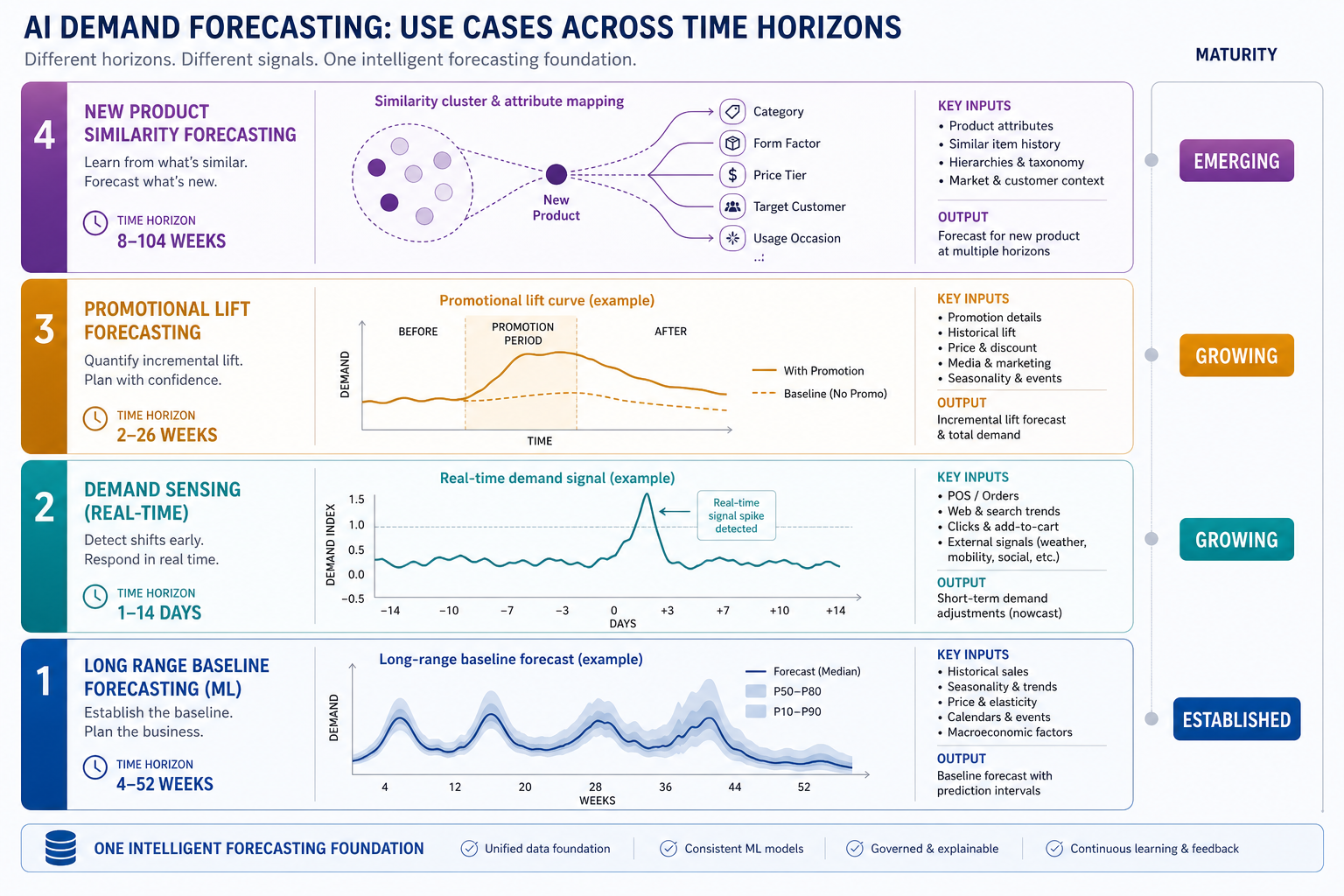
  • AI Demand Forecasting in CPG and Retail: A Structured Use Case Reference
    Demand PlanningGrowing

    AI Demand Forecasting in CPG and Retail: A Structured Use Case Reference

    A structured reference entry for supply chain leaders and demand planning decision-makers evaluating AI demand forecasting in CPG or retail contexts — covering four distinct functional sub-use-cases (baseline ML forecasting, demand sensing, promotional lift modeling, and NPI forecasting), their underlying AI techniques, adoption maturity levels, sourced ROI indicators, vendor fit by sub-use-case, and key implementation risks.

    ROI: 20–50% forecast error reduction and up to 65% lost-sales reduction for mature baseline ML deployments (McKinsey); 11–14% forecast accuracy improvement and 20% safety stock reduction (Kraft Heinz, o9 Solutions); 60% stockout reduction and 53% inventory loss decrease (AB InBev, o9 Solutions); 30% reduction in lost sales (Danone); 30% NPI forecast improvement (ToolsGroup eyewear case); ~17–20% promotional ROI improvement (independent research cited in SR Analytics, April 2026)CPG, Grocery and Mass-Market Retail
  • AI-Driven Dynamic Routing Optimization for Last-Mile Delivery
    Logistics — Last-Mile DeliveryGrowing

    AI-Driven Dynamic Routing Optimization for Last-Mile Delivery

    A structured use case library entry covering AI-driven dynamic routing optimization as a specific, bounded last-mile delivery application — organized around the DVRP framework, four routing archetypes, industry-differentiated ROI indicators, a segmented vendor roster, and the implementation risks that most organizations underestimate before deployment.

    ROI: 24.3% operational cost reduction, 92.8% on-time rate vs. 68.1% static baseline (Nature/Scientific Reports 2025, controlled 47-customer research scenario); 15–30% delivery cost reduction, 10–28% distance reduction in first year (Locus customer data and Global Market Insights, vendor-authored); on-time rates exceeding 90% (Research and Markets, cited in Locus 2026); ROI typically visible within 3–6 months when data prerequisites are met (RTS Labs)E-commerce, Grocery / Same-Day Retail

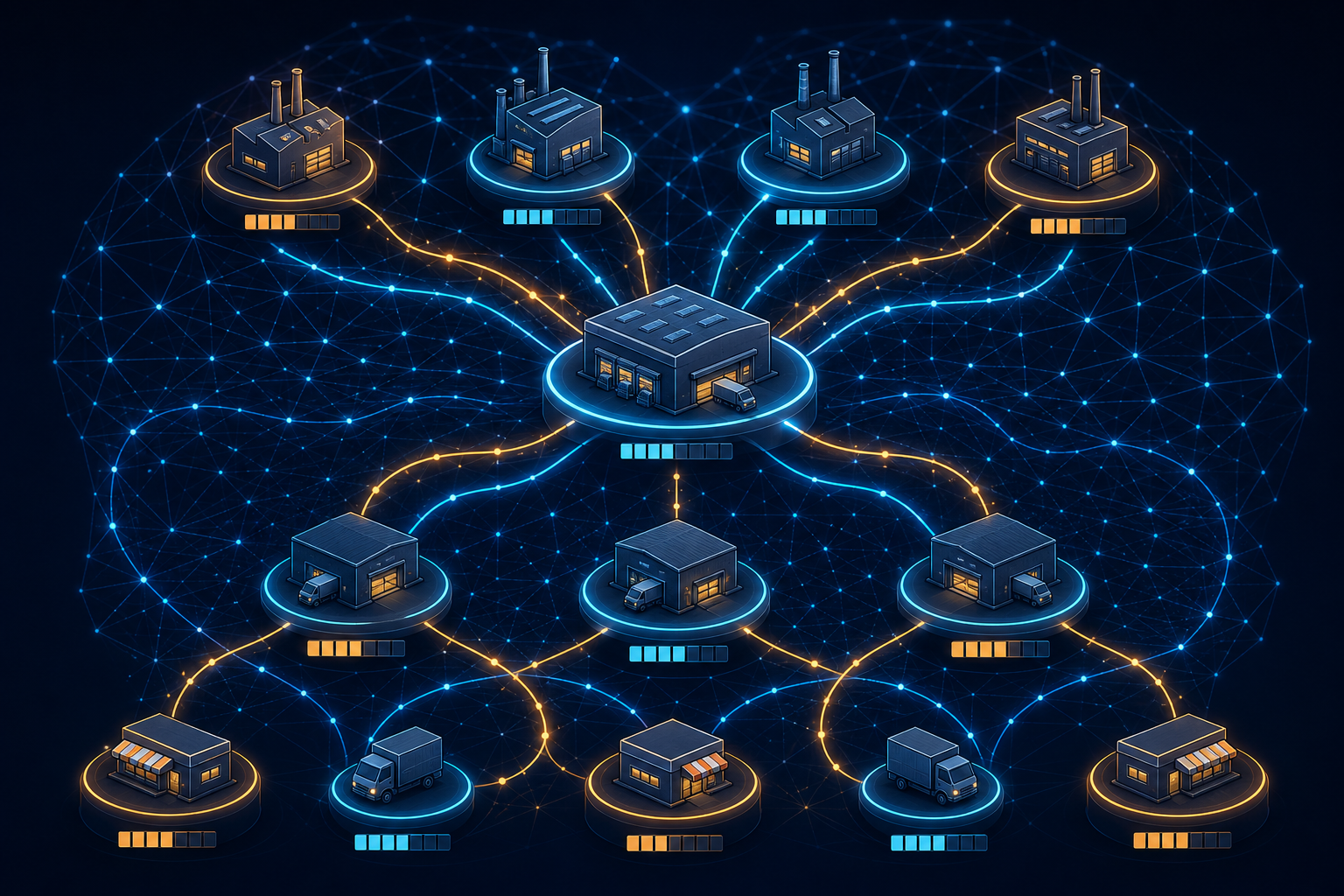
  • AI Safety Stock Optimization Across Multi-Echelon Inventory Networks: Deployment Evidence, Vendor Fit, and Implementation Risks
    Inventory ManagementGrowing

    AI Safety Stock Optimization Across Multi-Echelon Inventory Networks: Deployment Evidence, Vendor Fit, and Implementation Risks

    A structured use-case reference for supply chain directors and inventory planning managers evaluating AI-powered multi-echelon inventory optimization (MEIO) — covering documented deployment outcomes across pharma, CPG, retail, and industrial distribution, representative vendor differentiators, and the network complexity and data readiness conditions that determine whether MEIO is warranted.

    ROI: 15–30% inventory reduction while maintaining 98%+ service levels (ToolsGroup, vendor-reported); ICA Sweden 32% safety stock reduction (RELEX, direct customer statement); P&G $1.5B savings from MEIO adoption (ICRON, citing ResearchGate, vendor-reported); Caterpillar 98% parts fill within 24 hours (ICRON, citing cat.com, vendor-reported)Pharma & Life Sciences, CPG & Retail
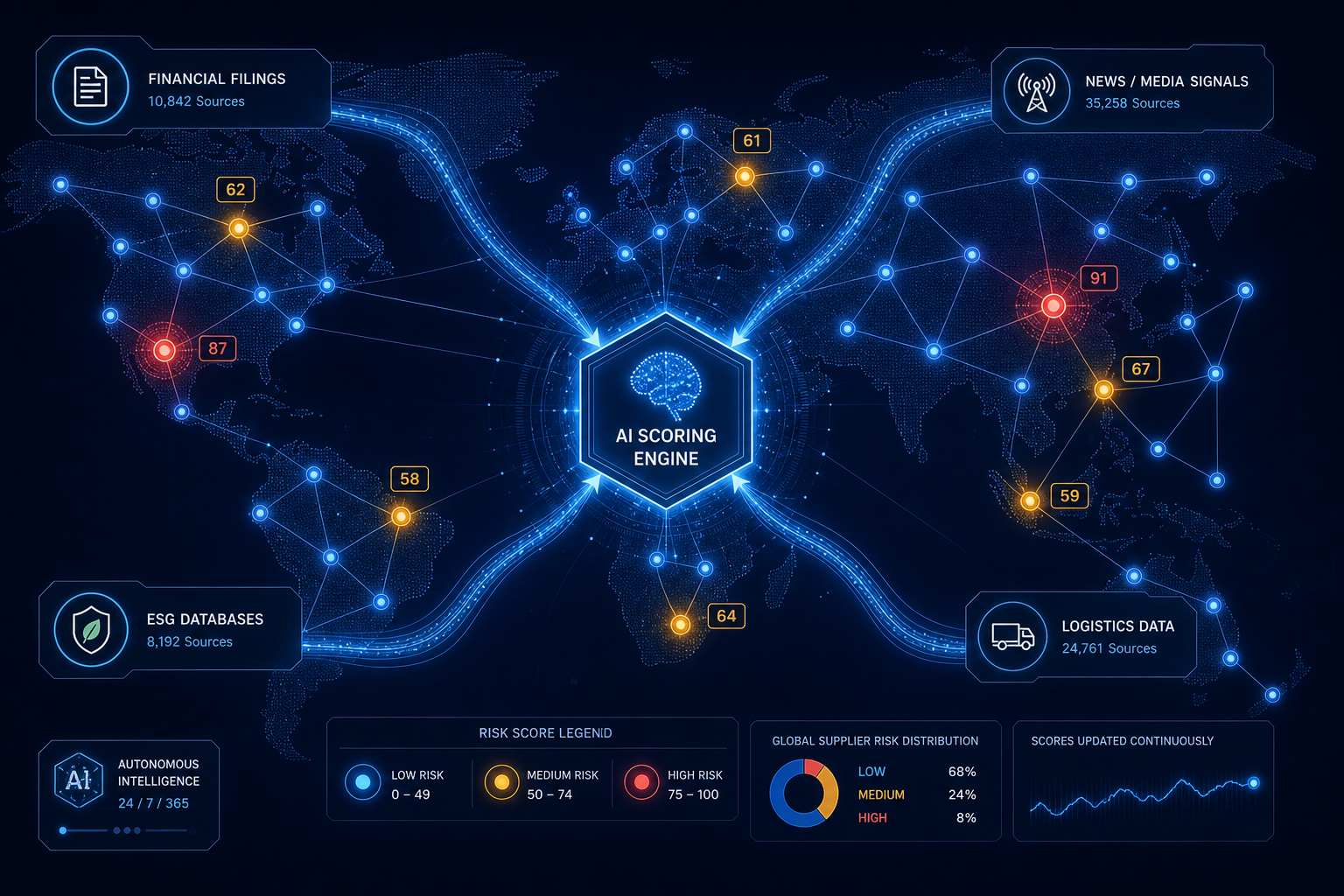
  • Autonomous Procurement AI Supplier Risk Scoring: Use Case Overview
    ProcurementGrowing

    Autonomous Procurement AI Supplier Risk Scoring: Use Case Overview

    A structured use-case library entry for CPOs, procurement directors, and supply chain risk leads evaluating autonomous AI supplier risk scoring — covering what the use case does, where it delivers documented value, which industries have deployed it, adoption maturity, a representative vendor landscape, and the implementation risks that determine whether outcomes are realized.

    ROI: 30% reduction in disruption-related revenue losses; 50–70% faster disruption identification (Everstream Analytics, 2025, vendor-reported); 3–6 month lead time on financial distress signals (JAGGAER, vendor-reported); supply chain disruptions cost 45% of one year's profits over a decade (McKinsey, via Everstream 2025)Automotive, Pharma & Life Sciences

Ready to move from application patterns to peer evidence or vendor comparison?